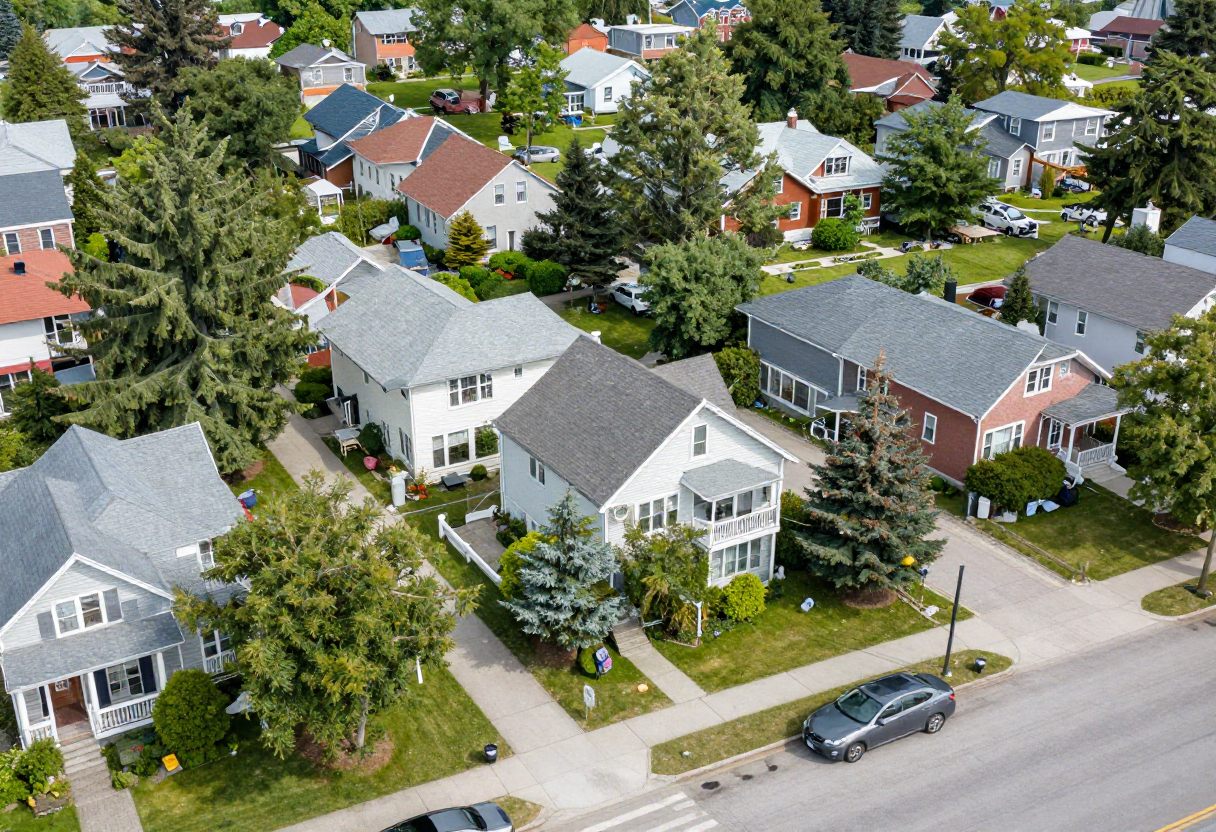
For much of the past decade, real estate conversations followed a familiar and largely transactional rhythm, one that emphasized square footage, bedroom counts, recent renovations, and asking price as the primary signals of value. Those factors still matter and will always play an important role in any buying decision, but they no longer carry the full weight they once did. In 2026, buyers are approaching the market with a noticeably broader lens, one shaped by experience, uncertainty, and a deeper awareness of how profoundly place influences quality of life. Increasingly, buyers understand that they are not simply purchasing a structure, but committing to a neighborhood, a daily routine, and a set of long-term conditions that will shape how they live for years to come.
This shift is not cosmetic, nor is it driven by fleeting trends or marketing narratives. It reflects a more fundamental change in how people evaluate risk, value, and long-term satisfaction in an environment that feels less predictable than it once did. Buyers have learned, often through difficult personal experience or second-hand stories, that a beautifully finished home can still lead to frustration if the surrounding community does not support their needs, expectations, or lifestyle.
A more deliberate and thoughtful buyer mindset
Today’s buyers tend to arrive at the process with a stronger sense of caution and a greater appetite for understanding the full picture before committing. Economic volatility, interest rate fluctuations, the normalization of remote and hybrid work, and heightened awareness of climate and infrastructure concerns have all contributed to a mindset that favours preparation over impulse. Purchasing a home now feels like a decision that requires foresight, patience, and fewer assumptions, rather than one that can be rushed or simplified.
As a result, buyers are asking questions that extend well beyond what can be answered during a single showing. They want to understand how traffic patterns affect daily routines during the workweek, not just how a street feels during a quiet weekend visit. They are paying closer attention to school catchment boundaries and how often those boundaries change over time. They want insight into future development plans, zoning decisions, flood exposure, access to public transit, and the general character of a neighborhood at different times of day and across different seasons. These questions are not rooted in distrust or skepticism, but in a more mature understanding of how easily uncertainty can turn into regret after the keys have changed hands.
Buyers increasingly recognize that unpleasant surprises after closing are not merely inconvenient, but emotionally taxing and financially costly, and that many of these surprises could have been avoided with clearer information earlier in the process. In this context, information has become a form of protection, and clarity has become one of the most valuable assets a buyer can have.
Why traditional listings struggle to meet modern expectations
Property listings are exceptionally good at highlighting a home’s visual appeal, layout, and surface-level features, but they were never designed to explain the realities of the surrounding community in any meaningful depth. A set of photographs cannot convey how a neighborhood feels in the evening or how it changes throughout the week. A short description cannot capture whether an area is defined by long-term residents, young families, transient renters, or short-term accommodations. Marketing language rarely makes clear which aspects of a neighborhood are stable and which are likely to evolve over time.
Faced with these limitations, buyers often attempt to assemble their own understanding by consulting municipal planning documents, comparing school rankings, browsing mapping tools, and reading local forums or social media discussions. While this research can be useful, it is also fragmented and uneven, requiring significant time and effort while still leaving important gaps. Instead of feeling reassured, many buyers end up feeling overwhelmed, uncertain about which sources to trust, and unsure how to interpret conflicting information.
The challenge, then, is not the absence of data, but the absence of structure, context, and thoughtful interpretation that connects information to real-world decision-making.
Community knowledge as a foundation for better decisions
Community insight has quietly moved from being a helpful supplement to becoming a core part of how serious buyers evaluate their options. When information about a neighborhood is presented in a structured, consistent, and meaningful way, buyers are better able to understand the tradeoffs they are making and the implications of those choices over time. This understanding does not eliminate uncertainty entirely, but it does replace vague anxiety with informed judgment.
Providing clear community context early in the process allows buyers to ask more focused questions and to align their expectations before emotional attachment clouds their thinking. Contrary to the fear that more information might slow decisions down, this approach often reduces hesitation later by addressing concerns before they escalate. Decisions feel steadier, not rushed, because they are grounded in a clearer sense of reality.
This evolution also reshapes the role of the REALTOR®. The most trusted professionals are no longer distinguished solely by access to listings or negotiating skill, but by their ability to translate complex, place-based information into insight that buyers can actually use. They help clients understand not just what a home offers today, but what living in that environment is likely to feel like in the years ahead.
Trust, in this context, is built through explanation and transparency rather than reassurance alone.
Why January sets the tone
The beginning of the year carries a distinct psychological weight in the buying cycle. January tends to attract buyers who are planning deliberately around school calendars, career transitions, family changes, and longer-term goals. These buyers are typically less reactive and more reflective, using the quieter pace of the season to prepare themselves for informed decision-making.
At this stage, vague or incomplete answers tend to create hesitation, while clear and well-organized information builds momentum and confidence. When buyers understand the broader context of a home early in the process, they are less likely to second-guess themselves later, particularly as timelines tighten and emotions intensify. January is less about moving quickly and more about establishing alignment and clarity from the outset.
Where DHARRO fits into this shift
DHARRO was built on the recognition that homes do not exist in isolation and that ignoring the surrounding context does not make it less important, only harder to understand. Every property sits within a network of influences that includes schools, amenities, zoning regulations, transit options, development patterns, and the character of the surrounding community, all of which shape the lived experience of owning that home.
By bringing these layers of information together in a clear, structured, and professional format, DHARRO supports more meaningful conversations between REALTORS® and buyers. The Community Feature Sheet® replaces scattered, ad-hoc research with organized insight that helps buyers see the bigger picture without feeling overwhelmed. Its purpose is not to persuade or to promote, but to explain, consistently and clearly, what surrounds a home and why that context matters.
When buyers receive community information in this way, the tone of the entire process changes. Conversations become more thoughtful and less reactive. Expectations are set earlier and with greater precision. Decisions feel grounded in understanding rather than driven by urgency or fear of missing out.
A stronger starting point for the year ahead
In 2026, the most effective real estate experiences will not be defined by louder messaging or more aggressive sales tactics, but by how well buyers are supported in making informed, confident choices. Buyers are asking better questions because they want fewer regrets and a deeper sense of certainty about decisions that will shape their lives for years to come.
The professionals and platforms that rise to meet this expectation will stand apart not by saying more, but by explaining more clearly and more thoughtfully. The home remains an essential part of the equation, but it is only part of the story.
Understanding the place that surrounds it is increasingly what turns a good purchase into a truly sound one.